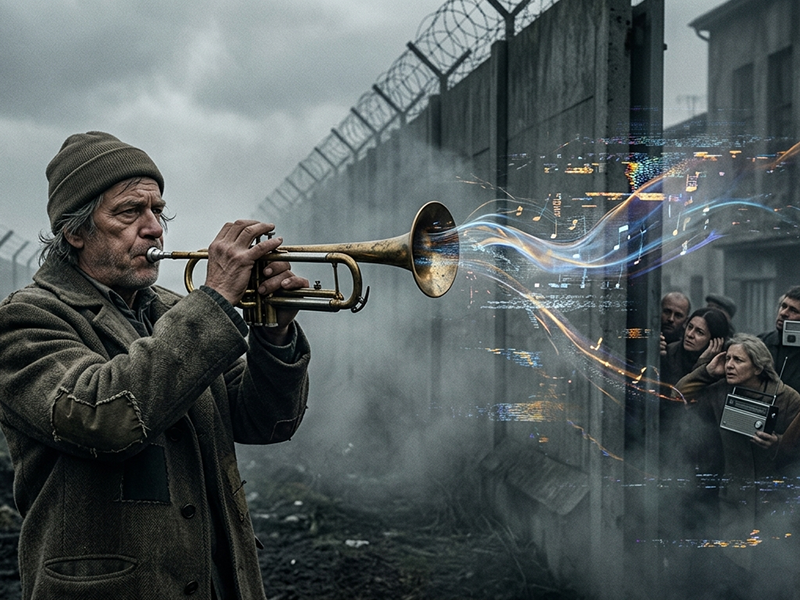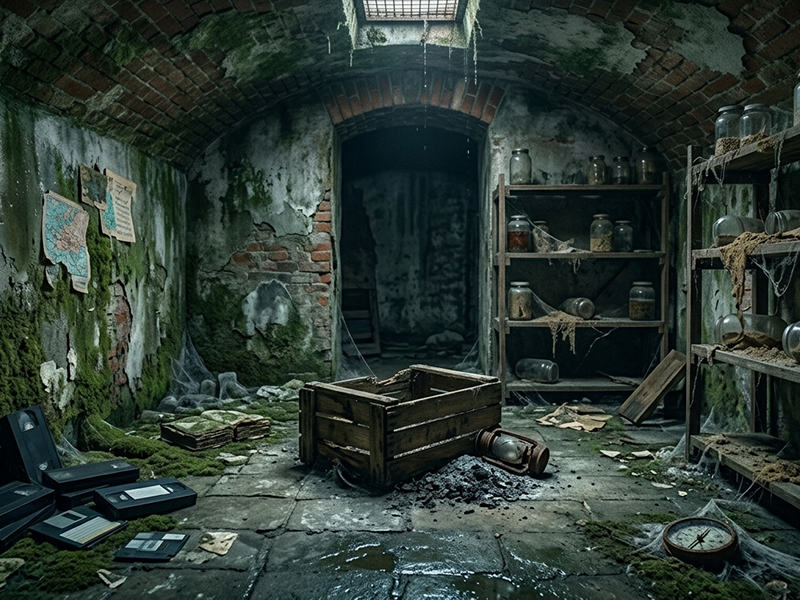
There is a moment in The Static and the Silence when Ardian Kodra is led for the first time to the meeting place. It is not a grand setting. There is no stage, no banner, no slogan painted on the wall. It is a low, cold room behind an abandoned textile factory, lit by a single lantern resting on the concrete floor. Four young people are inside. A girl hums softly to herself. A boy taps a rhythm on his knee. An older youth checks the wires on a battered cassette player held together with scraps.
And yet, for the people inside that room, this small space is enormous. It is the only place in the country where they can be themselves out loud.
Resistance That Did Not Look Like Resistance
Norberto Mazzi spends a great deal of care on this circle, because the circle is the truest engine of the novella. It is also the kind of resistance that history books rarely record. There are no manifestos here. There is no public protest. There are not even adults in the room, in any meaningful sense. There are only a handful of young people who meet on Friday nights to listen to music that the State has decided they are not allowed to hear.
It would be easy for a reader in another country, in another century, to underestimate what is happening in that cellar. To call it small. To call it harmless. To wonder why the regime would bother.
But the regime never wondered. The regime understood exactly what it was looking at.
Why Secret Gatherings Were Treated as a Real Threat
Authoritarian systems survive by deciding which feelings, which thoughts, and which sounds are permitted to enter daily life. Once that decision is made, the system spends most of its energy enforcing it. A cellar full of young people listening to American blues is not a political party. It is something more dangerous than that. It is a piece of private life that the State has not authored.
That is why officers patrol the alleys. That is why neighbors are encouraged to report neighbors. That is why a knock on a metal door late at night can stop every heart in the room.
What the Circle Gives Its Members
What Mazzi shows, beautifully and patiently, is what the circle gives the people inside it. It is not only the music. The music is the door. What waits behind the door is something even rarer in that country during those years. The right to be known.
Inside the cellar, Ardian does not have to pretend. He does not have to nod along to slogans he no longer believes. He does not have to flatten his face when a teacher repeats a phrase about foreign contamination. He can ask questions. He can laugh at the wrong jokes. He can feel something move inside him when a song plays, and he can let it show.
For a generation taught from childhood that the inside of a person must always match the outside the State requires, this is a quietly enormous gift.
The Cost of Being Seen
It comes at a cost. Mazzi never lets the reader forget that. Someone in the circle is questioned. Someone receives a note slipped under a door. Someone is followed home. The trust inside that small room becomes the most valuable thing the characters possess, and the easiest thing for fear to break.
When the raid finally comes, what is destroyed is not the music. The music had already lived. What is destroyed is the rare and fragile thing that the circle built around the music. The friendships. The trust. The hour of feeling unguarded.
Why Mazzi Keeps Returning to These Rooms
This is why his work keeps returning to small rooms in difficult years. They are where the truest history of a closed country lives. Not in the marches the State filmed for the cameras. Not in the speeches it printed in the papers. But in the basements, the attics, and the abandoned factories, a handful of people, week after week, refused to be the citizens they had been told to be.